
The House has a weakness for objects that look like they have seen something… or survived something.
A chipped carnival prize
A roadside saint with fading paint.
Daruma, with his thousand-yard stare
And especially: Mexican “Lupita” dolls.
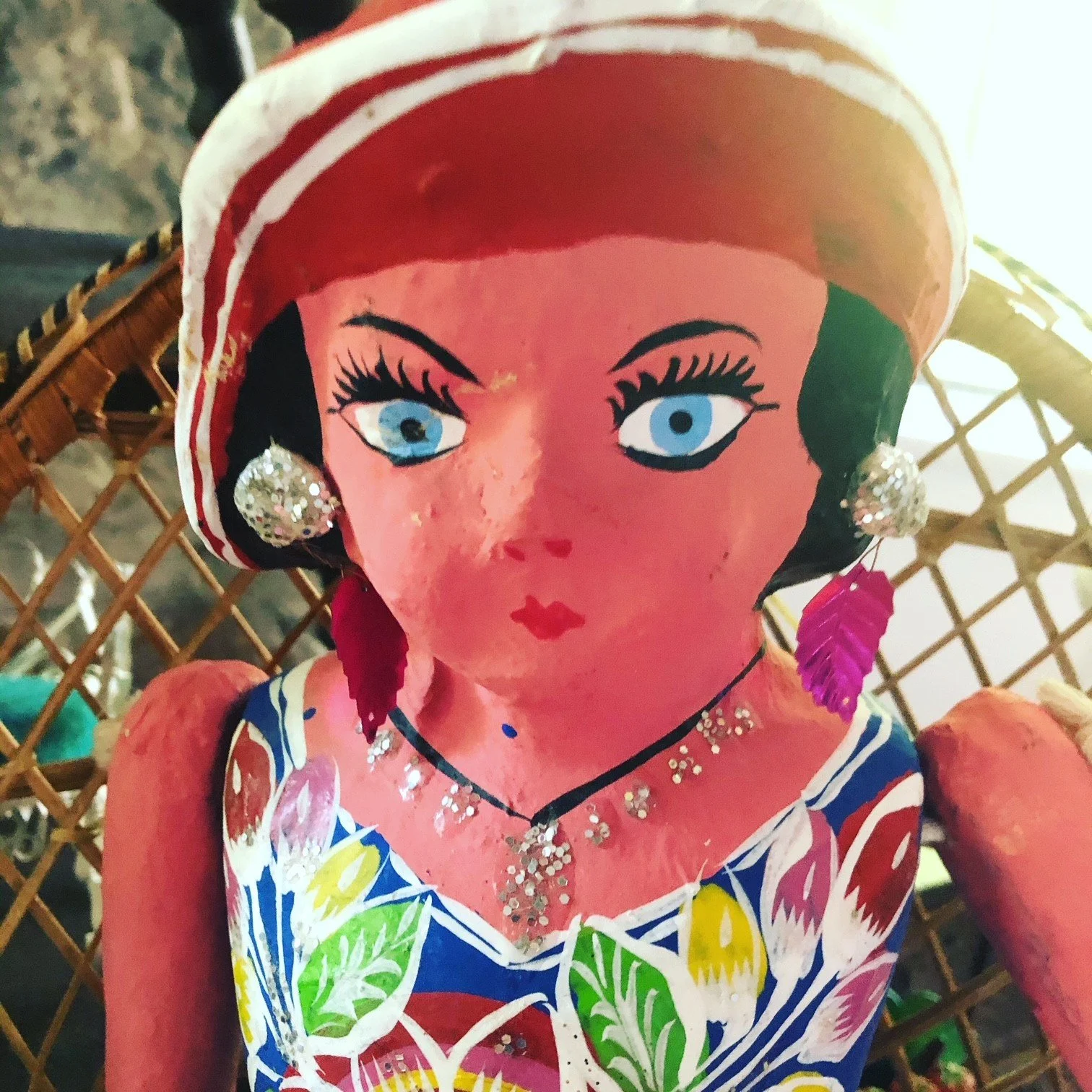
This Lupita has seen some sh!t.
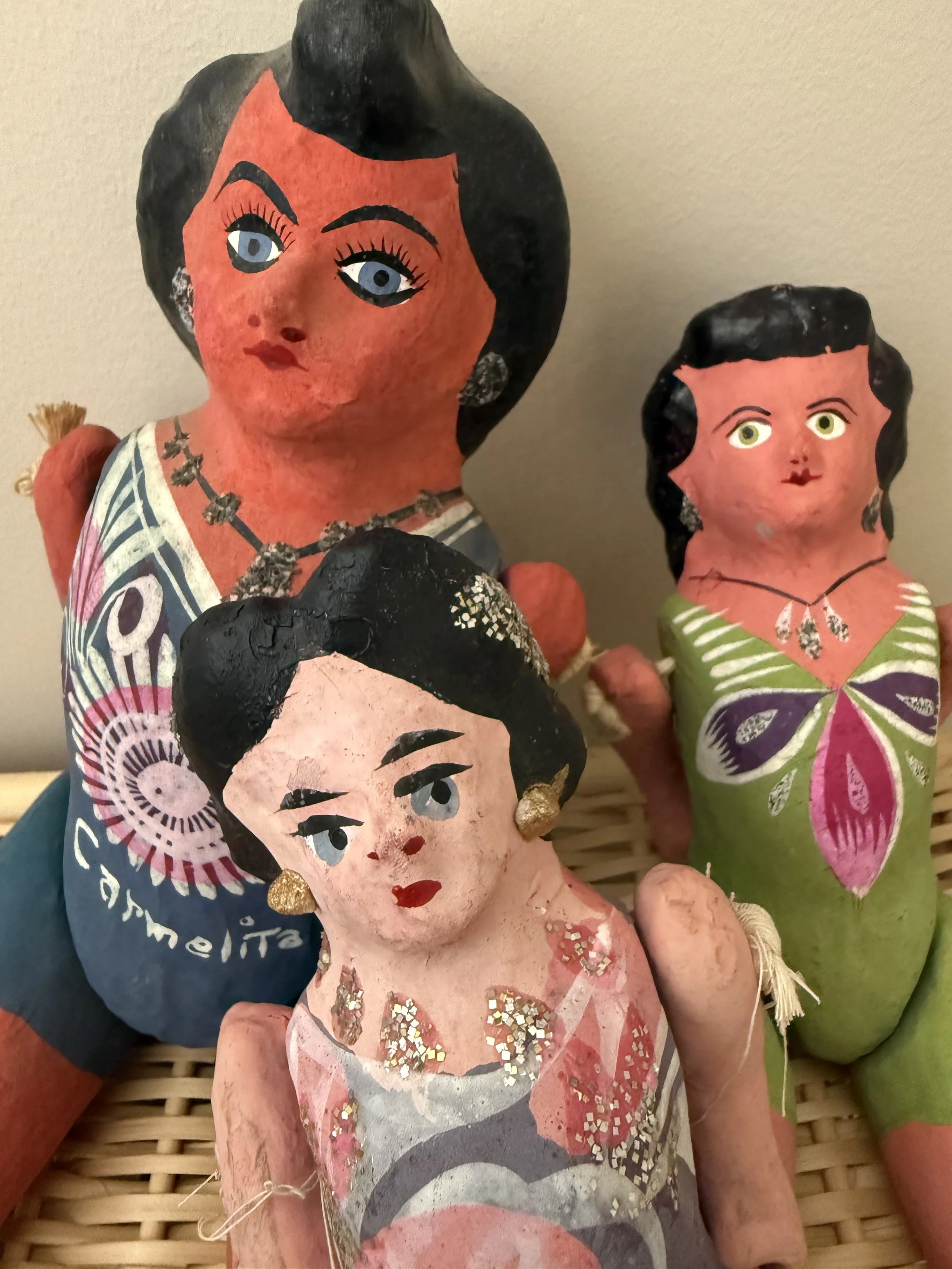
Trio of “Lupita” dolls; House of Good Fortune Collection
With their blushing cheeks, painted lashes and slightly haunted expressions, Lupita dolls occupy that perfect territory between beautiful and unsettling — which, coincidentally, is where a lot of folk art lives.
These dolls originated in central Mexico in the 19th century as a form of cartonería — a papier-mâché technique also used for piñatas and festival sculptures. Before imported porcelain dolls became common, Lupitas were the dolls ordinary Mexican girls actually played with. They were handmade, inexpensive and fragile in the best way possible.
Unlike factory-perfect dolls, Lupitas often have slightly asymmetrical faces or oddly proportioned limbs. Their expressions can look melancholy, sly, exhausted or quietly judgmental depending on the angle and lighting. In other words: they feel alive.
That emotional ambiguity is part of their charm.
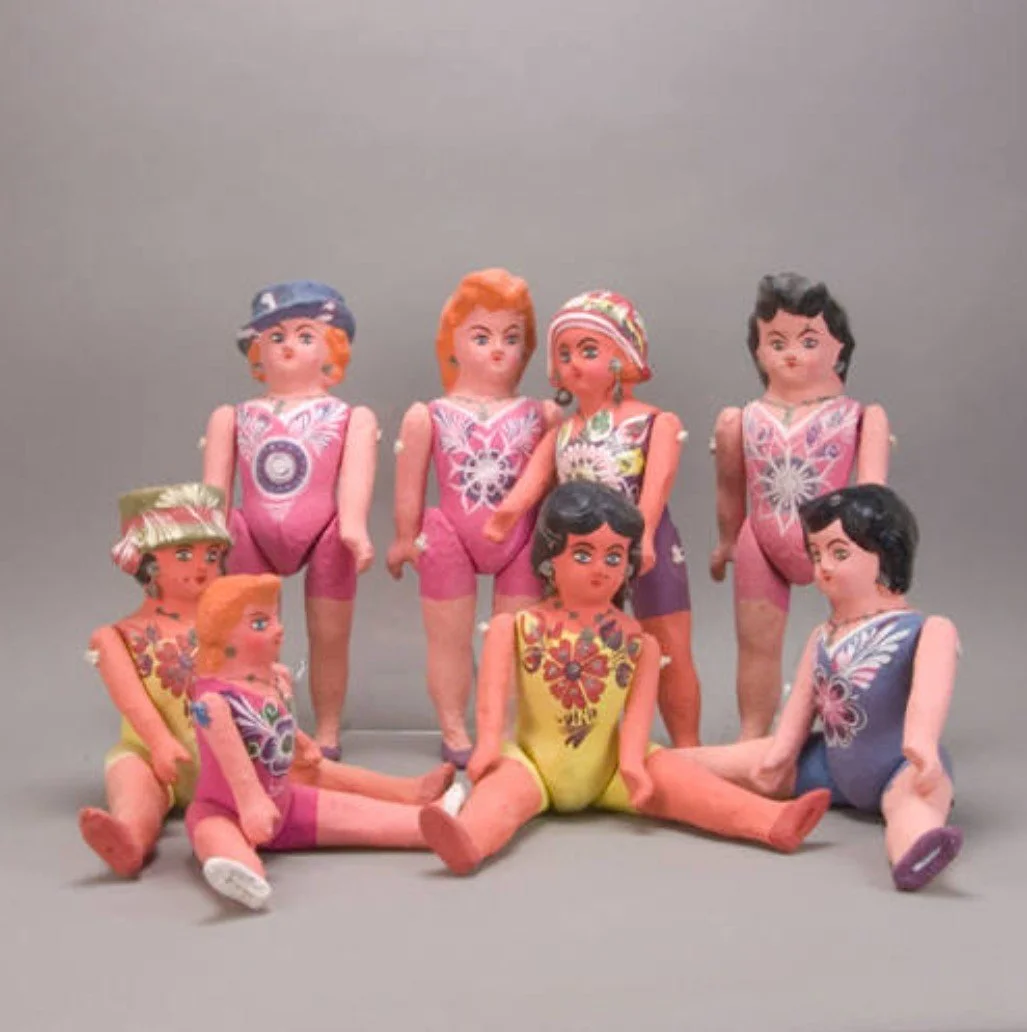
Collection of Lupita Dolls, from the collection of the Museum of International Folk Art; Santa Fe, New Mexico
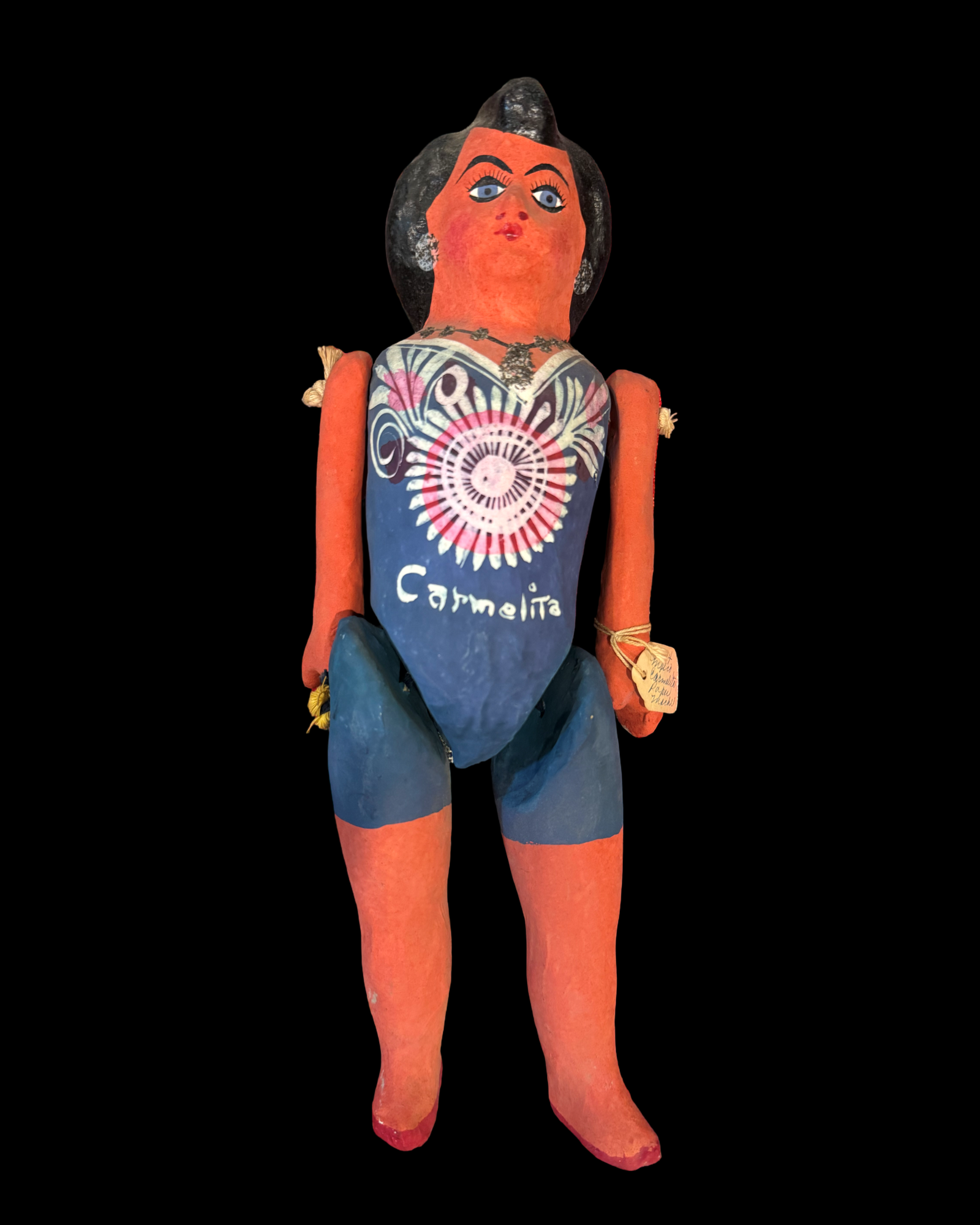
This Lupita is named “Carmelita.”
The name “Lupita” itself is a diminutive of Guadalupe — a nod to the deep presence of Catholicism and the Virgin of Guadalupe in Mexican popular culture — but the dolls themselves often feel more pagan than saintly. They belong to that fascinating world where religion, superstition, domestic life and folk magic all blur together.
Which is probably why we love them.
Are Lupita dolls really associated with prostitution?
Like many visually compelling objects, Lupita dolls carry a stranger layer of folklore. According to a long-circulating urban legend, Lupita dolls were sometimes displayed in the windows of cantinas, boarding houses or certain “ladies’ establishments” as a coded invitation — equal parts advertisement, good luck charm and beacon for lonely men with cash in their pockets.
The House suspects that this piece of folklore may result from the fact that the way their limbs are attached to their bodies causes them to sit in a decidedly unladylike fashion, with their legs splayed. Other versions of the tale claim the dolls were believed to attract business and prosperity more generally, acting almost like spiritual mascots for a shop or tavern.
Whether historically true, partially true or simply embroidered over time, the story feels perfectly suited to the Lupita herself: beautiful, mysterious, slightly melancholy and impossible to fully explain.
There is something wonderfully evocative about the image of a painted papier-mâché doll sitting in a dusty window silently luring people inside with her sad little face.
Frankly, we respect the hustle.
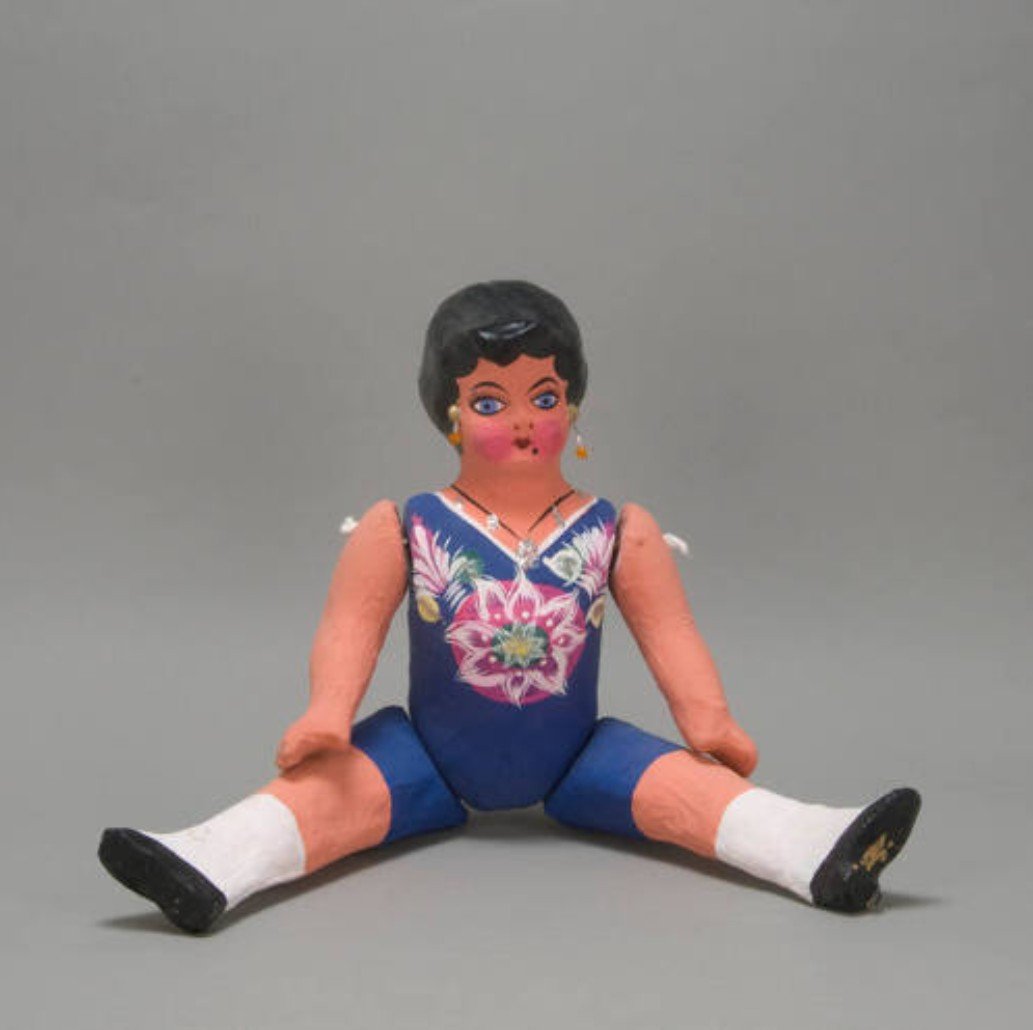
Lupita doll “doing number 17, the spread eagle” (IYKYK); From the collection of the Museum of International Folk Art
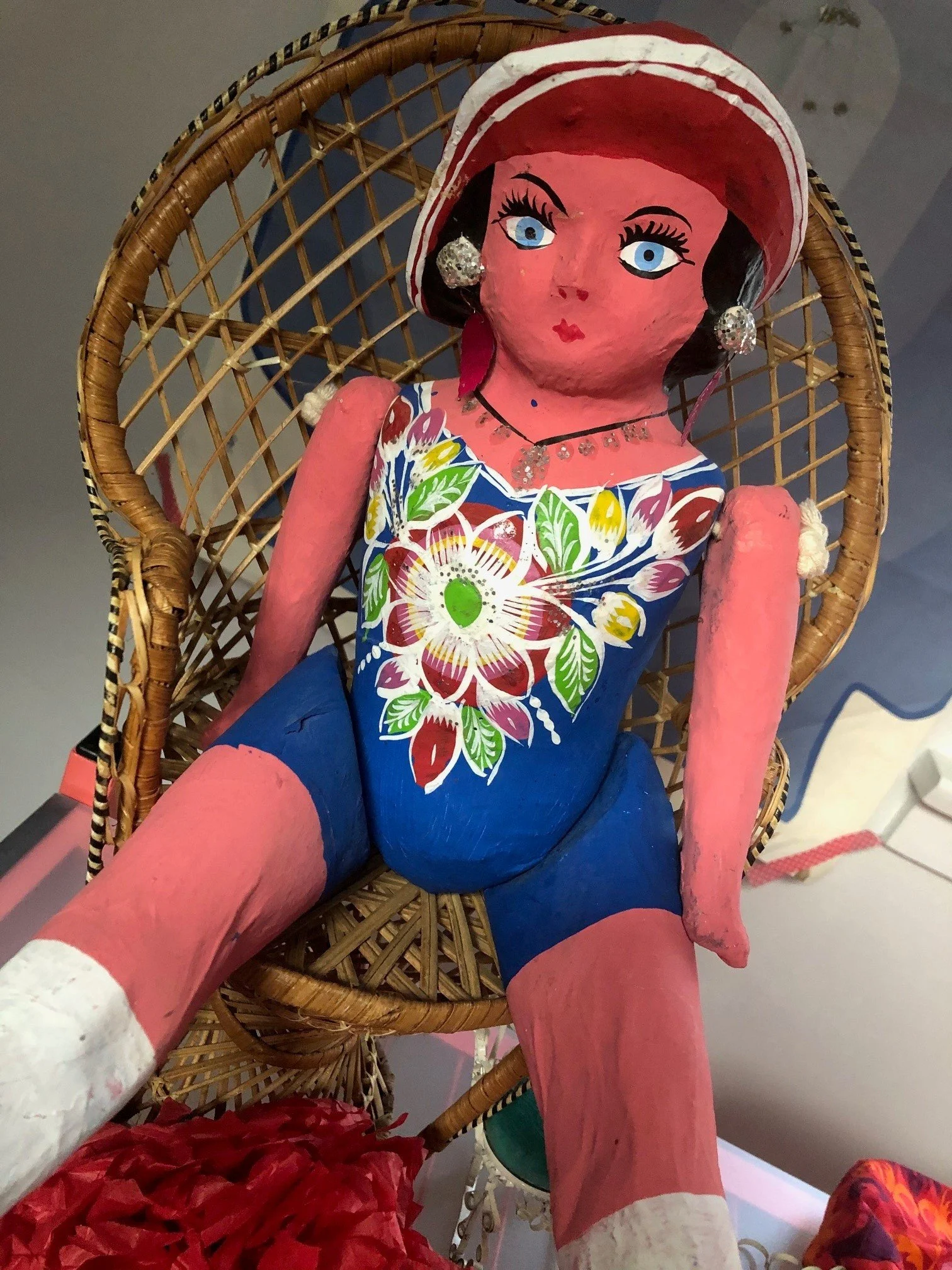
Lupita doll sitting in a chair; House of Good Fortune Collection
The House of Good Fortune Collection includes both vintage and contemporary Lupitas. They are objects that absorb atmosphere. The longer they exist, the stranger and more compelling they become.
At their best, Lupita dolls remind us that folk art does not need to be polished to be meaningful. Beauty can be awkward. Sacred things can be funny. Handmade objects carry fingerprints, moods, imperfections and traces of the people who made them.
That is the whole point.
And maybe that is why these dolls continue to resonate in an age of algorithmic perfection and mass-produced sameness. They still feel deeply, stubbornly human.